
Posts Tagged ‘Hendy Instructional Excellence Rubric’

Beyond the Checklist: Coaching for Impact Using an Arc of the Year Strategy
Imagine this: a new school year begins, and as a teacher, you’re handed a rubric with 16 different instructional practices, all deemed “essential” for excellence. Your coach then informs you they’ll be observing and coaching you on… well, all of them. Sound familiar? If you’re a coach, teacher, or school leader, you probably recognize the immediate feelings that arise from this scenario: overwhelm, scattered focus, and a sense of “where do I even begin?”
At Hendy Avenue, we recognize a fundamental truth about instructional coaching: you can’t effectively coach (or be coached on) 16 different things at once. It’s simply not sustainable.
Here’s why the “all at once” approach falls short:
- Coach Overwhelm: For coaches, trying to observe, provide feedback, and support growth across a vast array of indicators for every teacher is a recipe for burnout. The coaching becomes superficial, lacking the depth needed for true impact.
- Teacher Overwhelm: Teachers, already juggling countless responsibilities, are left feeling inadequate when faced with a long list of “areas for improvement.” This can lead to frustration and a lack of clear direction.
- Not All Indicators Are Created Equal: Some instructional practices are foundational, forming the bedrock of an effective classroom. Others are more advanced, building upon those initial skills. Treating them all with the same urgency neglects this natural cascade of development.
- Lack of Coherence: When every coach is focusing on different aspects of the rubric, and every teacher is getting varied feedback, the school’s PD efforts become fragmented. It’s incredibly difficult to have aligned PD that truly supports the coaching happening in classrooms if there’s no shared focus. This creates a chaotic environment where teachers receive “random” information rather than a coherent, supportive system.
Enter the “Arc of the Year”: A Strategic Approach to Coaching and PD
To combat this potential overwhelm, we advocate for chunking the Hendy Instructional Excellence Rubric and the associated coaching into manageable “arcs” across the school year. This strategy brings focus, coherence, and ultimately, greater impact to your instructional improvement efforts.
The Hendy Instructional Excellence Rubric is organized into four domains, each with an essential question and a set of indicators that describe what an effective classroom looks like. Our “Arc of the Year” strategy aligns with these domains to provide a clear pathway for teacher development. The goal for each teacher is to work toward a rating of “Proficiency” or a “Level 3” during each observation on each Indicator.
Here’s how it works:
Arc 1: Building a Strong Foundation (Domain 1: Classroom Culture)
The beginning of the school year is crucial for establishing a predictable, accessible, and joyful learning environment. How you start is how it is. Therefore, Arc 1 is intensely focused on Domain 1: Classroom Culture.
- PD Alignment: Your school-wide professional development should be specifically designed to reinforce strong routines, cultivate joy, and build positive relationships.
- Focused Observations & Feedback: When a coach enters a classroom, their observations and subsequent feedback are laser-focused on these foundational elements. They’re looking specifically at indicators related to predictable routines, high expectations for all, community and relationships, and academic joy.
- Targeted Coaching: Coaching conversations and support are rooted in these Domain 1 indicators. If a coach observes a classroom struggling with transitions, the coaching will center on strategies for smoother routines, and use the Core Teacher Skills from Domain 1 to help.
A critical nuance: if you’re coaching an experienced teacher who has already established a beautiful classroom culture, the coach shouldn’t waste time on what’s already mastered. Instead, the coach should look ahead within the framework and begin to coach that teacher on what they need, even if it falls outside the general Arc 1 focus. This personalized approach is key.
Arc 2: Deepening Instructional Practice (Domain 2: Lesson Content & Implementation)
Once a significant majority of teachers in a school have established a strong classroom culture, it’s time to move on to the design and implementation of instruction. Arc 2 shifts the focus to Domain 2: Lesson Content & Implementation. This domain addresses whether students are engaged with content that is purposeful, rigorous, and differentiated.
- Data-Driven Decisions: This transition is often informed by school-wide data. Are we seeing issues with student engagement in academic tasks? Are students demonstrating deep understanding, or just surface-level recall? This data guides the specific indicators within Domain 2 that will be prioritized.
- Coaching Alignment: During this arc, coaches are focused on things like lesson alignment, pacing, rigor, and differentiation. The goal is to ensure teachers are spending the most time on the most important concepts and that students are engaging in productive struggle with the content. When coaches enter classrooms, their observations and feedback are centered on these indicators. The majority of a teacher’s coaching should be in this arc unless they have a foundational gap in a prior domain.
Arc 3: Centering Student Thinking (Domain 3: Student Thinking)
After a strong foundation in classroom culture and lesson execution is established, the arc shifts to
Domain 3: Student Thinking. This domain asks to what extent students are responsible for the thinking, speaking, writing, and creating in the classroom.
- Coaching Alignment: When coaches observe during this arc, they are focused on the ratio of teacher to student thinking. Key indicators in this arc include questioning, ensuring students are doing the “heavy lifting,” discussion facilitation, and building content expertise in students. A coach will look to see if the teacher is asking questions at a variety of levels and if students are supporting their answers with evidence and explanation. The focus is on ensuring students are the ones doing the intellectual work.
- PD Alignment: School-wide data from coaching helps to inform school-wide PD. If, in Arc 3, many teachers are struggling with facilitating student discussion, then the school might plan a PD focused on techniques for discussion facilitation. The goal is to ensure that PD is aligned and coherent with support in individual coaching.
Arc 4: Responsiveness to Learning (Domain 4: Responsiveness to Learning)
The final arc of the year focuses on Domain 4: Responsiveness to Learning. This domain addresses how teachers use data and feedback to ensure students are learning and to reteach or provide support for more precise understanding.
- Coaching Alignment: This arc is centered on how teachers actively monitor student learning, use data to make instructional decisions, provide intentional feedback, and teach with purpose. Coaches will observe how teachers circulate to evaluate student progress and how they adjust their teaching based on misconceptions. This is about closing the loop of instruction, ensuring that student learning is continuously being assessed and supported.
The “Arc of the Year” is a framework, not a rigid straitjacket. While the general focus shifts, individualized coaching remains paramount. If a teacher’s classroom management significantly deteriorates, a good coach will still address that immediate need, regardless of the current arc. Conversely, if a teacher is excelling in the current arc’s focus, the coach should proactively move to areas where that teacher is ready for more advanced development. By strategically chunking the rubric into these arcs, schools can transform an overwhelming set of indicators into a clear, coherent, and highly effective pathway for teacher growth and student success.
Want support designing an arc of the year strategy for your school or district? Send us an email!
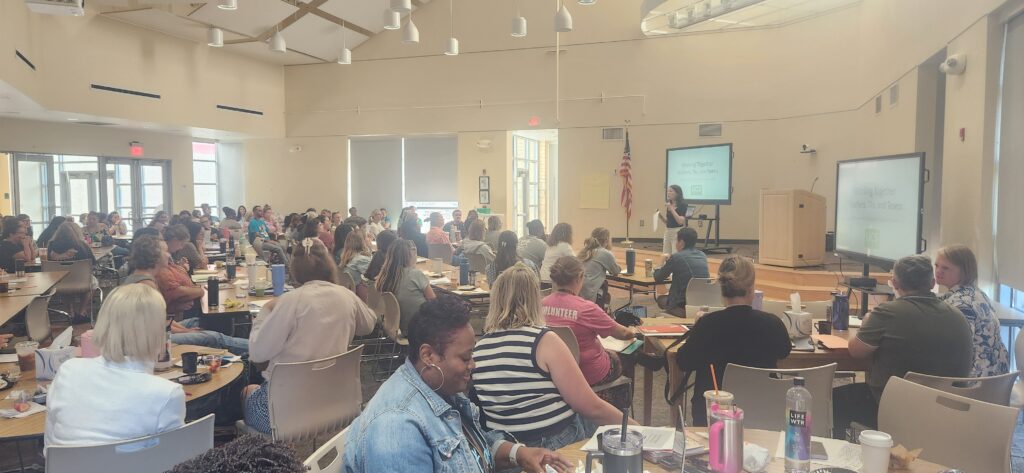
Unlock Teacher Growth with Hendy Instructional Excellence Rubric Training
The Hendy Instructional Excellence Rubric is more than just a tool for evaluation; it’s a comprehensive framework for professional growth. To ensure schools and districts can effectively leverage this rubric, Hendy provides a range of training and support services tailored to different needs and levels of engagement.
Our trainings can be tailored to your school’s specific needs, and are always a dynamic learning experience for your teachers and leaders. Don’t take our word for it – see below for feedback from Hendy training participants!
I loved all the content and the calibration with the videos and discussion was incredibly helpful. I also LOVE the rubric and am excited to use it!
Director of student services
The first session where we did a deep dive into the rubric was very helpful! We were able to take time to internalize the rubric, understand its purpose and structure, and practiced norming and applying the rubric to different scenarios.
Anonymous
The debrief of the rubric plus the norming and certification tasks were extremely useful and fun!School Dean of Curriculum and Instruction
High School Dean of Curriculum and Instruction
Hendy offers four main types of training and support to help school leaders and teachers master the rubric and integrate it into their daily practice:
- Rubric Training Materials + Train-the-Trainer: This option is ideal for schools that want to build internal capacity. Hendy provides a complete set of training materials, including slides, facilitator guides, and videos, for both school leaders and teachers. Additionally, we offer virtual “train-the-trainer” sessions to empower a school’s own staff to become expert facilitators.
- Rubric Training Facilitation: For schools seeking direct expertise, Hendy’s professional facilitators can lead training sessions. This ensures that leaders and teachers receive in-depth, hands-on instruction from those who know the rubric best.
- Readiness Assessment and Recommendations: Before a full-scale implementation, it’s crucial to understand your system’s current state. Hendy can conduct a thorough readiness assessment, including data collection and a written report with strategic recommendations, to ensure a smooth and successful rollout.
- Evaluation Design, Pilot, and Implementation: This is a highly customized service designed to align the Hendy rubric with your existing evaluation and development processes. It includes personalized support for stakeholder engagement, policy development, rubric customization, and continuous training to guarantee a seamless and effective implementation.
Whether you’re looking to build internal expertise, receive direct training, or get a customized implementation plan, Hendy’s training services are designed to help your educators thrive and create a culture of instructional excellence.

Martin Luther King Jr. Charter School for Excellence: The Hendy Instructional Excellence Rubric in Action
Meet Kendra Salvador, the Executive Director at Martin Luther King Jr. Charter School for Excellence in Springfield, Massachusetts. Kendra was getting feedback from her teachers that coaching was vague or lacked clarity. Teachers were unsure about how the feedback they were receiving from coaches was supposed to look in action in their classrooms. In addition, teachers were evaluated on a different rubric than what was used in their coaching. Teachers were experiencing a disconnect between the coaching they were receiving and the experiences teaching in their classroom.
Kendra discovered the Hendy Instructional Excellence Rubric, and was immediately impressed by the tool’s clarity, simplicity, and coherence. Kendra decided to adopt the rubric in her school, and have it replace the different rubrics in use for coaching and evaluation.
A key factor in her decision was the rubric’s focus on both teacher inputs and student outputs, a feature Kendra believes is crucial for effective instruction. Kendra noted that during initial walkthroughs, teachers saw firsthand how a lesson that appeared successful on the surface might be assessed as less effective when student engagement and learning were also considered. Kendra also appreciates the rubric’s Core Teacher Skills (CTS), which provide concrete and specific language that allows teachers and coaches to collaboratively identify a clear goal for a coaching cycle.
Kendra has taken a thoughtful, phased approach to introducing the rubric to her school.
- Pilot and Buy-in: First, Kendra brought the rubric to her Instructional Leadership Team, which includes leaders and teachers. After reviewing it and conducting a few instructional walks with the Hendy Rubric, the team’s feedback was overwhelmingly positive. They agreed that it was clearer and more practical than their previous tools.
- Strategic Alignment: Before introducing the rubric to the broader staff, Kendra meticulously aligned the Hendy Rubric indicators with the school’s strategic priorities for the year, including their focus on Responsive Classroom principles. This ensured that all school-wide initiatives were cohesive and mutually supportive.
- Gradual Rollout: Kendra previewed the rubric with teachers during summer professional development. This preview included an overview of the plan for coaches to use the rubric after the first observation to co-identify a coaching cycle goal with each teacher.
- Creating a Coherent System: The Instructional Excellence Rubric is now the single tool used for both coaching and formal evaluation. To support the evaluation process, Kendra added a fifth domain to the rubric to encompass professionalism, which includes items like reflection and attendance. The evaluation forms are housed on the Vector platform, ensuring all documentation is streamlined.
Kendra’s plan for the rubric at MLKCS centers on calibration and development to ensure the new system works as intended. This includes:
- Regular Calibration: The academic leadership team will meet at least twice a month to conduct calibration exercises. This is a critical step to ensure that all leaders—from the principal to the director of special education—are using the rubric consistently and providing teachers with a unified message.
- Building a Culture of Transparency: The rubric and calibration exercises will be “live” in meetings with both the academic leadership team and teacher PLCs. This approach is intended to demystify the evaluation process and empower teachers to take ownership of their own professional growth, regardless of who their coach is.
Stay tuned for future installments on the first year of implementation at MLKCS. Thank you, Kendra, for sharing your feedback and experiences with us!
Interested in implementing the Hendy Instructional Excellence Rubric at your school or district? Reach out to Jess or schedule a call!

Moving to Excellence: The Hendy Instructional Excellence Rubric Implementation Roadmap
Having a great tool is the first step to ensuring a vision for high quality instruction drives all coaching and support for teachers. Implementation, however, is really where the rubber really meets the road. In our 13 years of experience designing and implementing coaching and observation systems, we’ve found that the highest quality tool doesn’t mean much without careful implementation and change management.
Are you considering rolling out the Hendy Instructional Excellence rubric next fall? If yes, the time to start planning is now. Backwards planning with a focus on change management and implementation will help you ensure that your teachers and leaders maximize what the rubric can offer.
Step 1: Define the Criteria for Success
First, define what success looks like. Why are you implementing the Hendy Rubric? What do you want to be true for teachers and leaders as you implement?
By the end of the first half of the 2026-2027 school year, your goal could be for every teacher to:
- Understand the domains, indicators and performance levels of the rubric.
- Receive quality feedback from instructional leaders that is grounded in the rubric’s language.
- Feel empowered, not evaluated, by the rubric’s use.
Success for every leader and teacher coach could be to:
- Internalize the four domains, indicators, and performance levels of the rubric, and be fluent in the rubric’s language when used in coaching teachers.
- Use the rubric in assessing instruction and identifying highest leverage steps the teacher can take to improve.
- Feel empowered to recognize excellent teaching as described in the rubric, and support all teachers to demonstrate excellence in their classrooms.
Step 2: The Immediate Actions (Fall 2025 – January 2026)
Start with the end in mind, then focus on the now. The actions you take in the next few months will determine the success of your entire plan.
- Fall 2025 (Now): Study and Internalize.
- Get to know the rubric: You must deeply understand the rubric’s philosophy and structure. Identify how each domain connects to your school’s current goals and vision. Use the rubric to guide your own observations of classroom practice.
- Identify potential challenges: Reflect on your school’s culture. Are there existing tools or processes that might conflict with the Hendy Rubric? Are there any teachers or teams that might be resistant? Thinking through these now will help you proactively address them later.
- Initial conversations: Have one-on-one or small-group conversations with key teacher leaders and members of your leadership team to gauge interest and gather initial feedback. Start with the change agents who will help you champion this change.
- Winter 2025-2026 (November-January): Strategize the Rollout.
- Decide how you’ll use the rubric: The rubric can be used purely as a development tool, driving feedback and coaching for teachers. The rubric can also be used as an evaluative tool, driving accountability for teachers. It can also be used both ways. Decide how you’ll use the rubric in your school.
- Secure buy-in: Present the rubric to your team. Explain the “why”—its focus on equity, academic rigor, and social-emotional learning.
- Communicate the vision: Introduce the idea of a new instructional tool in staff meetings. Frame it as an exciting opportunity for professional growth and instructional improvement.
- Test the rubric: Invite teams to take the rubric for a spin. Choose one domain or one indicator, and observe a classroom together. Discuss what you see in the classroom and how it aligns to that indicator or domain. Help your colleagues get a feel for the rubric.
- Budget for the change: Allocate funds for professional development, stipends for your design team, and potential support from Hendy. Reach out if you want more information about how we can support you!
Step 3: The Critical Milestones (Spring/Summer 2026)
Spring and summer are the critical times to create and implement your plan to prepare for fall..
- Spring 2026 (February-May): Build the Foundation.
- Form a design team and create a plan: Create a small, representative group of teachers and leaders to co-create the implementation plan. This ensures the plan is practical and widely accepted.
- Training plan: The design team should outline the professional development sequence. This plan should include training on the rubric’s content and how to use it for observation and feedback.
- Pilot Program: Identify a small group to pilot the rubric, or even just one domain or indicator. The group should use the rubric according to the plan created by the design team.
- Training materials: Create training materials to introduce and calibrate leaders and teachers to the rubric. Review Hendy’s training plan options to find out ways we can help.
- Summer 2026 (June-August): Intensive Training & Calibration.
- Summer training: Host a summer training session for all faculty. Engage teachers and leaders with case studies, video examples of teaching, and group calibration exercises where they practice scoring based on the rubric.
- Resource Preparation: Ensure all supporting documents, forms, and observation tools are ready for use on day one of the school year.
By starting today, you’re building the foundation for a sustainable culture of instructional excellence. The backward plan ensures that your Fall 2026 implementation is the culmination of a well-executed and collaborative effort.
Do you want help with implementation planning? Need support in training and norming for your teachers and leaders? Reach out to set up a call!

What You Measure is What Matters: Why We Care So Much About Instructional Rubrics
The most critical in-school factor in a student’s learning outcomes is the quality of the teacher in the classroom. Teachers deserve feedback, coaching, and growth opportunities that support them to be the best they can for their students. To truly foster professional growth and ensure high-quality instruction for all students, we need a way to measure and define what “good” teaching looks like. This is where a high-quality teacher observation rubric becomes an indispensable tool. A great rubric is more than just a checklist; it’s a shared language and a roadmap for excellence. The fundamental principle at play is simple: what we measure is what matters. The selection of the tool or tools we use to guide classroom observation and teacher development is a signal of what we value most in teaching and learning.
That’s why we have shared the Hendy Instructional Excellence Rubric free-of-charge with our community. The Hendy Rubric articulates the specific, observable teacher behaviors that drive student outcomes. This clarity provides teachers with a clear understanding of expectations. They know exactly what they’re being coached on and how their performance will be evaluated. The rubric also helps school leaders and coaches calibrate on a shared definition of excellence. When everyone is using the same criteria and language, the feedback a teacher receives becomes more consistent and reliable.
The Hendy Instructional Excellence Rubric moves beyond simply articulating what a teacher does and instead focuses also on what students are learning and doing. A teacher’s input is only as effective as the resulting student output. By ensuring the indicators include both teacher actions and student actions, the rubric encourages a shift in mindset. It prompts teachers to ask, “Is what I’m doing leading to meaningful learning for my students?” This focus on student outcomes is the ultimate measure of success and the core purpose of all instructional support.
The Hendy Instructional Excellence Rubric can help you to measure what truly matters in teaching in service of student outcomes. Providing targeted, focused coaching and support allows leaders to empower teachers to be their best and ensure that all students receive the high-quality education they deserve.
Want to know how the Hendy Instructional Excellence Rubric can help you measure what matters? Reach out to Jess at jessicawilson@hendyavenue.com.